
 EN
EN
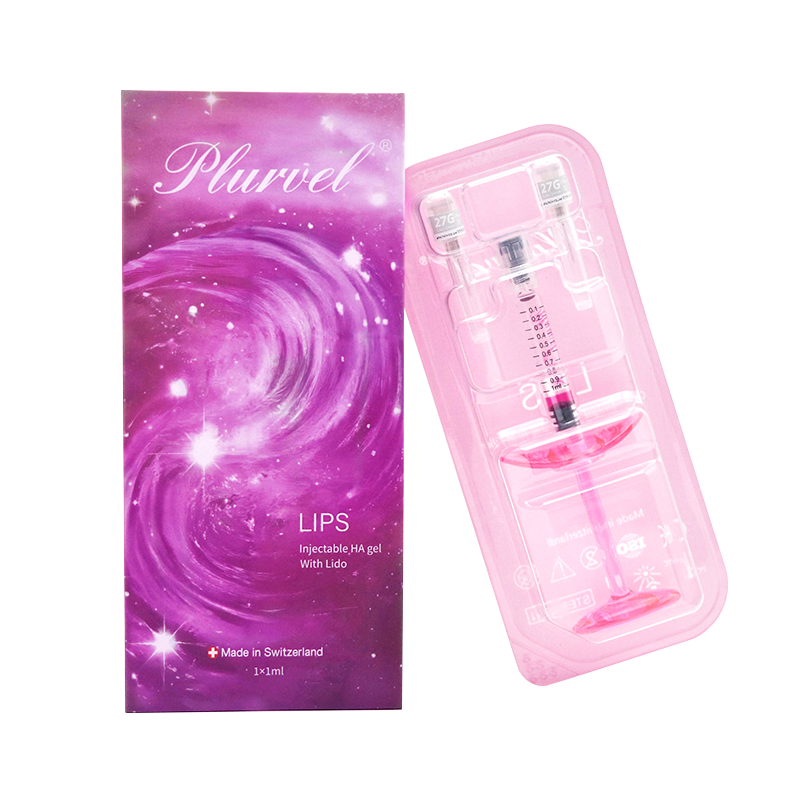
Mechanism of Action: Restoring Volume and Hydration in Facial Tissues
When it comes to restoring facial volume, hyaluronic acid fillers work wonders because they can hold around 1,000 times their own weight in water. This helps fight against the volume loss we see when our bodies start producing less collagen over time, plus all that daily wear and tear from sun exposure and pollution. According to some research published in Dermatologic Surgery back in 2022, these fillers actually managed to reduce wrinkle depth by about 46% after half a year. How? They create this kind of osmotic effect that makes skin feel firmer and tighter again. What's really interesting is how HA works within the body. The way it interacts with tissues is pretty similar to what happens naturally in our extracellular matrix, which means most people don't experience much inflammation or rejection compared to other types of fillers on the market today.
The Role of Cross-Linking in Enhancing Filler Longevity and Biocompatibility
Cross-linking transforms liquid HA into stable gels by forming molecular bonds, improving durability while maintaining biocompatibility. The degree of cross-linking directly influences elasticity (G') and resistance to enzymatic degradation:
| Cross-Linking Level | Elastic Modulus (G') | Typical Longevity |
|---|---|---|
| Low | 150–300 Pa | 6–9 months |
| Moderate | 300–500 Pa | 9–12 months |
| High | >500 Pa | 12–18 months |
Moderately cross-linked formulations retain 85% of volume at 12 months (Smith et al., 2021), offering an optimal balance between longevity and natural movement in dynamic areas like nasolabial folds.
Understanding CE and FDA Certification: What It Means for Product Safety and Clinical Use
CE and FDA certifications reflect rigorous but distinct regulatory standards for medical device safety:
| Criteria | CE Marking (EU) | FDA Approval (US) |
|---|---|---|
| Primary Focus | Safety and performance | Safety and effectiveness |
| Testing | ISO 13485 compliance | PMA or 510(k) clearance |
| Clinical Evidence | Literature review + lab data | Pivotal human trials |
| Post-Market | Vigilance system monitoring | FAERS adverse event reporting |
FDA Class III devices require premarket approval supported by 12-month clinical data, whereas CE marking relies on conformity with EU Medical Device Regulation, including biocompatibility testing. Both mandate sterility controls and batch consistency under global GMP standards.
Wrinkle Reduction with Hyaluronic Acid Fillers: Efficacy and Treatment Insights
Target Areas for Wrinkle Correction: From Nasolabial Folds to Marionette Lines
HA fillers correct wrinkles by restoring volume to facial depressions and smoothing lines. Key treatment zones include:
- Nasolabial folds: 50–70% depth reduction in 85% of patients after six months (Journal of Cosmetic Dermatology 2024)
- Marionette lines: 76% improvement in jawline definition based on 12-month studies
- Perioral and glabellar lines, with an average dermal thickness increase of 400 μm
Clinical Evidence from Pivotal Trials on HA Filler Effectiveness
A meta-analysis of 17 randomized controlled trials showed HA fillers improve wrinkle severity by 84% versus placebo, with results lasting 9–12 months. Cross-linked formulations demonstrated significant improvements in key aesthetic markers:
| Metric | Improvement | Study (Year) |
|---|---|---|
| Skin hydration | +32% | Springer 2023 |
| Radiance score | +41% | ScienceDirect 2024 |
Over 90% of patients reported satisfaction with natural-looking outcomes in global surveys (n=2,800, 2023).
Longevity of Results and Maintenance Protocols for Sustained Rejuvenation
Initial results are immediate, but peak collagen stimulation occurs at 4–6 weeks. To maintain effects:
- Schedule touch-ups every 9 months using low-viscosity HA
- Apply daily SPF 50+ (UV exposure reduces filler longevity by 30%)
- Combine with neuromodulators for dynamic wrinkles
With phased treatments, clinicians achieve sustained correction for 18–24 months, with complication rates below 1.2% in FDA-monitored practices.
Non-Surgical Nose Contouring (Liquid Rhinoplasty): Applications and Aesthetic Outcomes
Rise of Liquid Rhinoplasty: Advantages Over Surgical Options
Since 2020, liquid rhinoplasty has really taken off, with almost nine out of ten people opting for this procedure over traditional methods. It works great for fixing things like bumps on the bridge of the nose, uneven sides, and adjusting how far forward the tip sticks out, all without needing to go under anesthesia. What makes this option so appealing compared to surgery? Well, there's no scarring involved, and patients can get back to their normal lives right away instead of waiting weeks to heal. According to research published in 2022 looking at around 450 cases, most folks (about 92%) actually prefer hyaluronic acid treatments because they can be undone if needed and give pretty good results that last between a year and a year and a half.
Techniques and Anatomical Considerations in Nasal HA Filler Injection
Effective nasal contouring requires precise mapping of subunits—dorsum, tip, and columella—while avoiding vascular structures like the angular artery. High-G’ (high-cohesion) fillers provide structural support at the radix, whereas lower-density products smooth supratip depressions. Using blunt-tip microcannulas reduces vascular complications by 47% compared to needles (Facial Plastic Surgery, 2023).
Achieving Natural Symmetry and Patient Satisfaction in Nose Contouring
Pre-procedure 3D imaging predicts outcomes with 86% accuracy, enabling targeted correction of minor deviations such as nostril asymmetry or subtle septal shifts. A 2023 patient-reported outcomes study (n=312) showed 94% satisfaction when HA fillers corrected ≥3 mm anatomical discrepancies. Follow-up sessions at 9–14 months refine contours while preserving nasal valve function.
Safety Profile and Risk Management in Hyaluronic Acid Filler Treatments
Common and rare side effects: Immediate versus delayed reactions
The safety profile of HA fillers is pretty impressive overall. Most people report only minor side effects that go away on their own. According to a big study from 2024, around 92% of any problems patients experience are just temporary annoyances nothing serious at all. Right after treatment, swelling happens quite frequently between 18% and 34% of cases along with some redness and occasional bruising but these usually disappear within about a week. The really rare complications worth mentioning include things like small bumps under the skin which affect less than 1% of patients or those pesky granulomas that pop up somewhere between 0.02% to 0.4%. These tend to happen when someone doesn't get the injection right or if there's something going on with their immune system already. And here's another interesting point worth noting for anyone considering this option: when done properly in clean environments, HA fillers actually pose about 40% fewer chances of getting infections compared to those permanent implant alternatives according to ScienceDirect research from last year.
Vascular complications in nasal fillers: Risks and prevention strategies
The nose’s complex vasculature increases occlusion risk, occurring in 0.05–0.1% of liquid rhinoplasties. Prevention is critical and includes:
- Using blunt-tip microcannulas (<25G) in high-risk zones
- Aspirating for 10–15 seconds before injection
- Limiting bolus volumes to ≤0.1 mL
Per 2021 clinical guidelines, real-time capillary refill assessment and access to pulsed hyaluronidase (≤1500 IU/hour) are essential for managing suspected occlusions (J Clin Aesthet Dermatol 2021).
Role of hyaluronidase in reversing adverse events and ensuring patient safety
Hyaluronidase is the only FDA-approved agent for reversing HA filler complications, with 98% efficacy in dissolving misplaced product within 4–6 hours when used appropriately. Recommended protocols include:
- Administering test doses (3–15 IU) to rule out hypersensitivity
- Injecting 300–600 IU directly into occluded vessels
- Repeating doses at 24-hour intervals if necessary
A 2025 trial confirmed full resolution of vision-threatening events when hyaluronidase was given within 90 minutes of symptom onset (Plast Reconstr Surg Glob Open 2025).
Frequently Asked Questions (FAQ)
What are hyaluronic acid fillers used for?
Hyaluronic acid fillers are primarily used to restore volume to facial tissues, reduce wrinkles, and enhance facial contours such as nasolabial folds, marionette lines, and others.
How long do the effects of hyaluronic acid fillers last?
The duration of the effects can vary based on cross-linking levels but typically range from 6 to 18 months, with moderate cross-linking providing effects for up to 12 months.
Are there any side effects of using hyaluronic acid fillers?
Common side effects include minor swelling, redness, and occasional bruising, which usually resolve within a week. Rarely, small lumps or granulomas may form.
What are the safety standards for hyaluronic acid fillers?
Safety standards are regulated through CE marking in the EU and FDA approval in the US, ensuring product safety, effectiveness, and compliance with global regulations.
Can hyaluronic acid fillers be reversed if needed?
Yes, hyaluronic acid fillers can be dissolved using hyaluronidase, making them a flexible option for non-permanent corrections.
Table of Contents
- Mechanism of Action: Restoring Volume and Hydration in Facial Tissues
- The Role of Cross-Linking in Enhancing Filler Longevity and Biocompatibility
- Understanding CE and FDA Certification: What It Means for Product Safety and Clinical Use
- Wrinkle Reduction with Hyaluronic Acid Fillers: Efficacy and Treatment Insights
- Non-Surgical Nose Contouring (Liquid Rhinoplasty): Applications and Aesthetic Outcomes
- Safety Profile and Risk Management in Hyaluronic Acid Filler Treatments
- Frequently Asked Questions (FAQ)