
 EN
EN
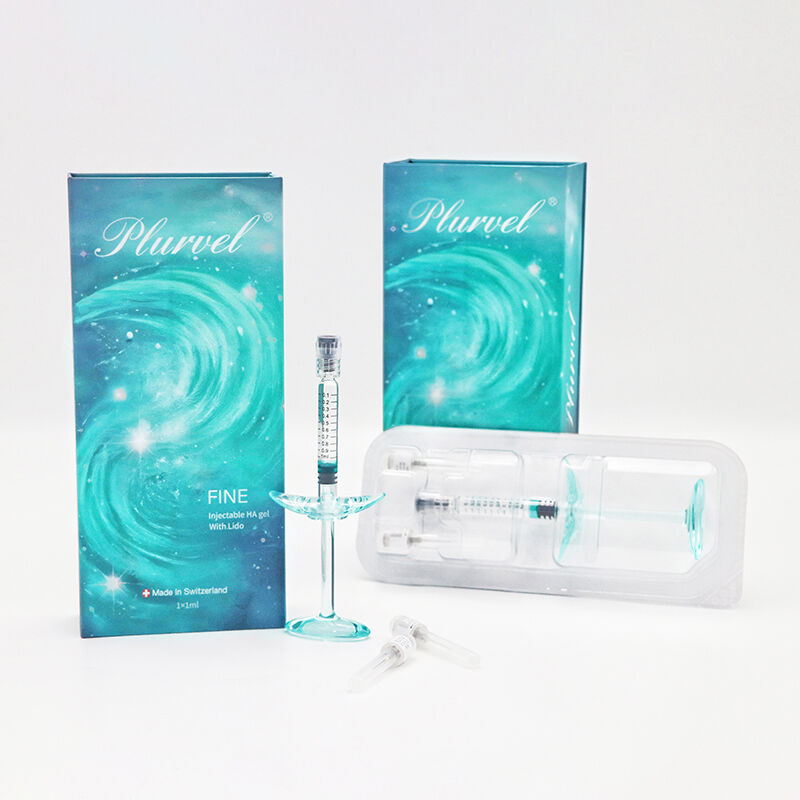
Why Choose Dermal Fillers OEM Manufacturing for Brand Launch?
Accelerating Time-to-Market by Leveraging Proven Formulas and Regulatory Pathways
Working with an OEM partner for dermal filler products can really cut down on development time, often getting products to market within just 18 months or so. This happens because these manufacturers already have established HA platforms that have gone through FDA, EMA, or NMPA approval processes. Companies don't need to spend those 3 to 5 years plus around $2 million on their own research, stability tests, compatibility checks, and all the paperwork that comes with bringing something new to market. What makes this approach work is how OEMs handle the production of clinical samples using trial and error methods. Brands then find themselves able to jump on emerging trends much faster than they could otherwise, all while staying away from most of the headaches associated with regulations and technical problems that come up during product development.
OEM vs. ODM vs. Private Label: Strategic Trade-offs for Dermal Fillers OEM Brands
Selecting the right manufacturing model hinges on balancing control, differentiation, and speed:
| Model | Development Control | Brand Differentiation | Time Investment | Ideal For |
|---|---|---|---|---|
| OEM | Full customization | Highest | 12–18 months | Proprietary formulations |
| ODM | Partial tweaks | Moderate | 6–9 months | Formula adjustments |
| Private Label | None | Minimal | 1–3 months | Rapid market testing |
When it comes to owning a brand completely, OEM stands out because of things like customized cross-linking tech, adjustments to hyaluronic acid concentrations, and those special flow characteristics that really set products apart from competitors. These features help build solid intellectual property protection too. On the other hand, ODM gives companies a way to stand out without breaking the bank by building on already established platforms. Private label options let businesses jump into markets quickly with standard formulas. Looking at the bigger picture though, if a company wants lasting brand value and genuine trust in medical circles, going all in on OEM makes sense despite the upfront costs being quite steep for many startups.
How to Vet and Select a Trusted Dermal Fillers OEM Manufacturer
Assessing Core Capabilities: GMP Certification, Fill-Finish Capacity, and Hyaluronic Acid Expertise
Manufacturers who hold up-to-date ISO 13485 certification for GMP compliance should be at the top of any evaluation list. These certifications matter because they cut down on contamination risks by around 92% compared to places without such standards. When looking at fill finish capabilities, there are really three main things to check out. First, does the facility have those automated filling systems that ensure precision? Second, what kind of cleanroom environment do they maintain? Ideally something like an ISO Class 5 space. And third, can they handle lyophilization processes for products sensitive to temperature changes? Since hyaluronic acid based fillers make up roughly 78% of the worldwide market these days, it's crucial to look into their molecular weight consistency, how well they master cross linking technologies, and whether they have proper infrastructure for purifying HA specifically. Watch out for facilities that don't monitor viscosity in real time or rely solely on internal testing rather than third party validations. Such operations tend to produce batches with inconsistencies above plus or minus 15%. Lastly, make sure the manufacturing capacity matches what will be needed when launching a product. Facilities producing less than about 50,000 units per month might find themselves overwhelmed if demand suddenly spikes.
| Capability | Verification Method | Industry Benchmark |
|---|---|---|
| GMP Compliance | Audit certification documents | Valid ISO 13485 license |
| HA Purity | Request third-party assay reports | ¥98% hyaluronan content |
| Fill-Finish Precision | Observe production line trials | €0.5% dosage deviation |
Validating Global Compliance: FDA, EMA, and NMPA Alignment for Scalable Market Entry
When looking at regulatory compliance, it's essential to have proper documentation showing alignment with key standards. This means getting FDA 510(k) clearance for selling in the US market, obtaining the CE mark according to EU Medical Device Regulation 2017/745, and securing NMPA Class III approval specifically for entry into China. Companies that already have validated dossier packages tend to cut down on time spent entering new markets by around 6 to 9 months compared to firms needing to reformulate their products. Also worth checking is whether their pharmacovigilance system actually complies with both the FDA's Post Market Clinical Follow Up (PMCF) requirements and the EU's Periodic Safety Update Reports (PSUR). There's been a noticeable trend where gaps in these areas contribute to roughly one third of all recent product recalls. If scalability matters, look for partners who can handle multiple market registrations at once instead of going through each country individually. This approach saves money too since repeated stability testing alone can cost approximately 740 thousand dollars for every delayed product launch.
The End-to-End Dermal Fillers OEM Development Workflow
From Concept to Clinical-Grade Sample: Customization, Stability Testing, and Iterative Refinement
The development process starts by customizing hyaluronic acid formulations. We adjust things like how thick it is, how stretchy it gets, how fast it breaks down in the body, and how long it lasts overall. These adjustments need to fit what doctors want clinically and what patients expect aesthetically. For stability testing, we follow those ICH guidelines (Q1A R2 if anyone cares about specifics). Samples get put through their paces in controlled environments with higher temps and humidity for around three to six months. This gives us an idea of how they'll hold up over years on store shelves. With every new version, we look at lab results showing how materials degrade plus feedback from early clinical trials. This helps tweak properties like cross-linking so the product stays in place long enough but still works naturally with tissues. Before moving forward, all versions must pass biocompatibility tests according to ISO 10993 standards. It's just part of standard protocol these days.
Scale-Up & Commercialization: Packaging Integration, Batch Documentation, and Audit-Ready Quality Systems
For commercial scale manufacturing, sterile syringe filling must happen inside ISO Class 5 cleanrooms if we want to avoid endotoxin contamination problems. These issues were found in roughly 1 out of every 10,000 units according to recent EU GMP audits in 2023. When it comes to batch records, companies follow those strict ALCOA+ guidelines pretty much religiously. Every single important parameter gets captured digitally these days, whether it's looking at HA molecular weight distributions or tracking through each terminal sterilization cycle step by step. Our quality systems are always ready for audits thanks to real time environmental monitoring while the actual filling takes place. We've got automated systems watching for particles and stability chambers that keep logging data non stop. This setup makes inspections from FDA, EMA, and MDR authorities go smoothly most of the time, which is really helpful when trying to get products approved in different markets around the world.
FAQ
What are the benefits of choosing OEM manufacturing for dermal fillers?
OEM manufacturing provides full customization, highest brand differentiation, and helps in creating proprietary formulations with strong intellectual property protection.
How does OEM manufacturing differ from ODM and Private Label approaches?
OEM involves full customization and deeper brand differentiation, whereas ODM allows partial tweaks on established platforms, and Private Label offers rapid market testing with standard formulas.
What certifications should a trusted dermal filler OEM manufacturer hold?
A trusted manufacturer should have up-to-date ISO 13485 certification for GMP compliance, ensuring lower contamination risks and higher production precision.
Why is global compliance important for OEM manufacturers?
Global compliance ensures scalable market entry, saving time and money for companies by avoiding delays and ensuring proper alignment with regulatory standards.