
 EN
EN
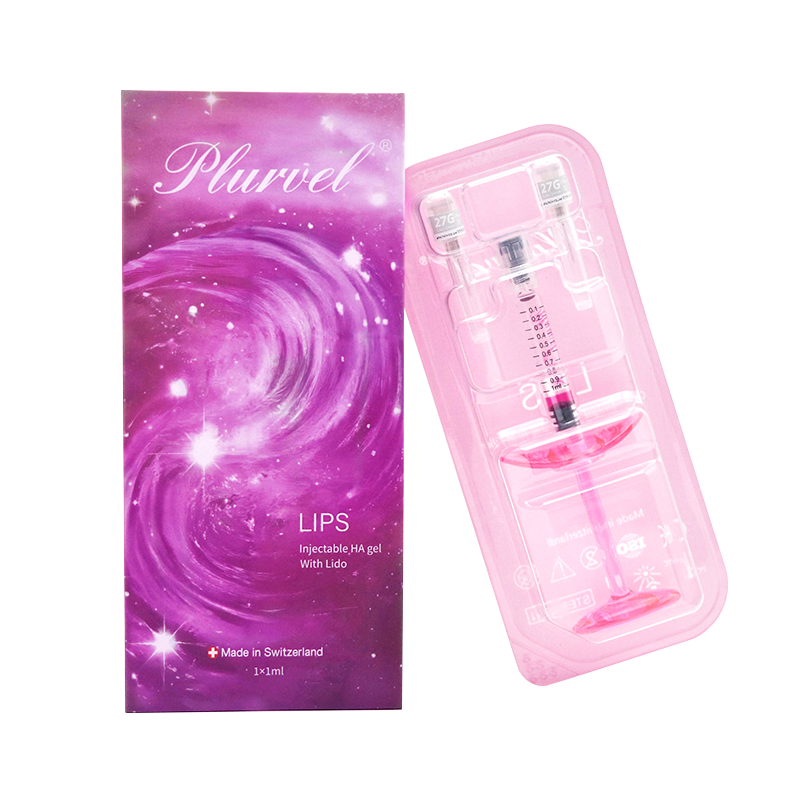
Why Regulatory Compliance and GMP Partnership Define a Trusted Hyaluronic Acid Supplier
USP/EP compliance, endotoxin control (<0.1 EU/mg), and sterile filtration validation as non-negotiable baselines
For injectable grade hyaluronic acid, meeting pharmaceutical standards isn't optional it's absolute necessity. Compliance with both USP and EP guidelines forms the bedrock of production practices across the industry. Each manufacturing batch needs to maintain endotoxin levels under 0.1 EU/mg because anything above this can cause dangerous pyrogenic reactions when used clinically. The sterile filtration step through those special 0.22 micron membranes isn't just about getting rid of microbes either. This process has to be fully validated with proper integrity tests done before and after filtration as part of standard operating procedures. Just having a Certificate of Analysis doesn't cut it anymore. Real quality assurance comes from having robust quality management systems built right into daily operations. When making high purity HA, manufacturers typically need at least three stages of purification to remove leftover proteins, nucleic acids, and those pesky endotoxin clusters. Failure in this area leads to roughly 27 percent of all injectable product recalls each year according to FDA data from last year. And let's not forget the financial risks involved either. Companies facing GMP violations often pay around $740k per incident based on Ponemon Institute research from 2023. These numbers explain why smart manufacturers keep their regulatory compliance efforts in house rather than trying to outsource them.
Beyond certification: Real-world supplier collaboration – batch traceability, stability data sharing, and rapid deviation resolution
Good hyaluronic acid suppliers don't stop at paperwork but actually become partners in the business. They build transparency right into how they run things day to day. What does this look like? Complete tracking of where every batch comes from all the way through production steps like making HA, cleaning it up, sterilizing, and filling containers. This information is available for each specific batch number. The best companies go further than just sending regular updates. Instead of waiting for monthly summaries, they provide ongoing stability information showing how products break down under different conditions like heat changes, acidity levels, and varying concentrations. This kind of detailed info helps create better formulas and cuts down on problems during clinical trials by about one third according to recent industry research. When something goes wrong, top suppliers send actual experts instead of generic support staff to fix issues within three days max. These teams don't just report what happened after the fact. They work ahead of time to prevent future problems while keeping everything in line with both project timelines and what regulators expect.
| Collaboration Metric | Basic Supplier | Trusted Partner |
|---|---|---|
| Batch Traceability Depth | COA only | Raw material – final vial |
| Stability Data Transparency | Summary report | Full degradation kinetics |
| Critical Deviation Resolution | 7+ days | ≤72 hours |
The distinguishing mark of a premier hyaluronic acid supplier lies in treating compliance as a collaborative discipline–not a checkbox exercise–where shared risk management protects patient outcomes.
Custom Hyaluronic Acid Concentration Options: Matching Formulation Goals to Clinical Applications
Precise concentration selection defines therapeutic efficacy across medical applications. A hyaluronic acid supplier supporting custom concentration ranges enables formulators to align with clinical requirements–without compromising sterility, stability, or rheological fidelity.
Application-driven concentration ranges: Joint viscosupplementation (0.8–1.5%), dermal fillers (1.5–4.0%), and anti-adhesion barriers (0.2–0.6%)
- Joint injections: 0.8–1.5% concentrations deliver optimal viscoelasticity for osteoarthritis pain relief while preserving natural joint mobility–validated in pivotal Phase III trials (e.g., Hylan GF-20).
- Dermal fillers: 1.5–4.0% solutions provide progressive structural scaffolding; higher concentrations (>2.5%) support deep-volume restoration, while mid-range (1.5–2.5%) balances lift with natural tissue integration.
- Surgical barriers: Ultra-low 0.2–0.6% formulations prevent postoperative adhesions without impeding tissue healing–achieving rapid clearance (t½ < 48 hrs) while maintaining barrier integrity during critical wound-healing windows.
These ranges reflect evidence-based biomechanical thresholds–not arbitrary benchmarks–and require suppliers capable of reproducible, scalable synthesis across the full spectrum.
Rheological performance trade-offs: How concentration impacts viscosity, elastic modulus (G'), and clinical extrudability
Concentration directly governs HA’s rheological profile: viscosity and elastic modulus (G') increase exponentially–not linearly–with each incremental percent. While elevated G' enhances residence time and mechanical support, it also raises injection force–demanding careful device compatibility planning.
| Concentration | Viscosity | Elastic Modulus (G') | Injection Force |
|---|---|---|---|
| Low (≤1%) | 5–50 Pa·s | 10–100 Pa | Minimal |
| Medium (1–2.5%) | 50–500 Pa·s | 100–500 Pa | Moderate |
| High (≥3%) | >500 Pa·s | >500 Pa | Significant |
Suppliers with integrated rheology labs and device-testing partnerships enable formulators to co-develop injection-ready products–ensuring extrudability through 27G–32G needles without compromising sterility, particle count, or molecular integrity.
The Role of Molecular Weight and Cross-Linking in Injectable HA Performance
The molecular weight (MW) and how much something gets cross-linked work together to determine how injectable hyaluronic acid behaves in actual clinical settings. When we talk about high MW HA products above 2 million Daltons, they tend to create better hydrodynamic volume and exhibit that shear-thinning property which is really important for things like joint injections. After all, our joints need proper shock absorption and lubrication, and these effects depend heavily on how those polymer chains tangle up with each other. Most manufacturers use BDDE for cross-linking because it helps protect the HA network from breaking down when exposed to enzymes like hyaluronidase. This protection means the product stays active in the body for significantly longer periods compared to non-crosslinked versions, roughly around 40 to 60 percent longer actually. For people getting dermal fillers, this extended durability often results in results lasting well beyond a year. What's fascinating though is that practitioners can fine tune exactly how much projection, lifting effect, and spreadability occurs simply by adjusting the cross-linking density during manufacturing.
The molecular weight (MW) and cross-linking need to work together properly. When we have high MW but low cross-linking in hyaluronic acid, it spreads really well on the surface for minor corrections. On the flip side, lower MW combined with higher cross-linking gives much better structural integrity deeper in tissues. Many suppliers don't actually understand how these factors interact, so they look at them separately which can lead to problems down the road like unexpected breakdown rates or issues getting product through needles during injections. A real collaboration between formulators and analysts means adjusting both properties based on what kind of delivery method works best, where exactly in the body the treatment needs to go, and how long patients expect results to last.
| Parameter | Low Range | High Range | Clinical Impact |
|---|---|---|---|
| Molecular Weight | <1 MDa | >2 MDa | – Viscosity, – Elastic support |
| Cross-Linking | 1–2% BDDE | 4–6% BDDE | – Degradation resistance, – Cohesivity |
FAQ
What standards must hyaluronic acid suppliers comply with?
Hyaluronic acid suppliers must comply with USP and EP guidelines, maintaining endotoxin levels under 0.1 EU/mg to ensure safety and avoid pyrogenic reactions.
Why is batch traceability important for hyaluronic acid suppliers?
Batch traceability ensures transparency and accountability in production, allowing for complete information on each batch from raw material to final product.
How does concentration affect hyaluronic acid's rheological properties?
Concentration impacts viscosity and elastic modulus (G'), affecting the product's injection force and compatibility with medical devices.
How do molecular weight and cross-linking influence injectable HA performance?
Molecular weight and cross-linking together determine the HA product's hydrodynamic volume, shear-thinning properties, and resistance to enzymatic degradation, impacting its effectiveness and longevity.