
 EN
EN
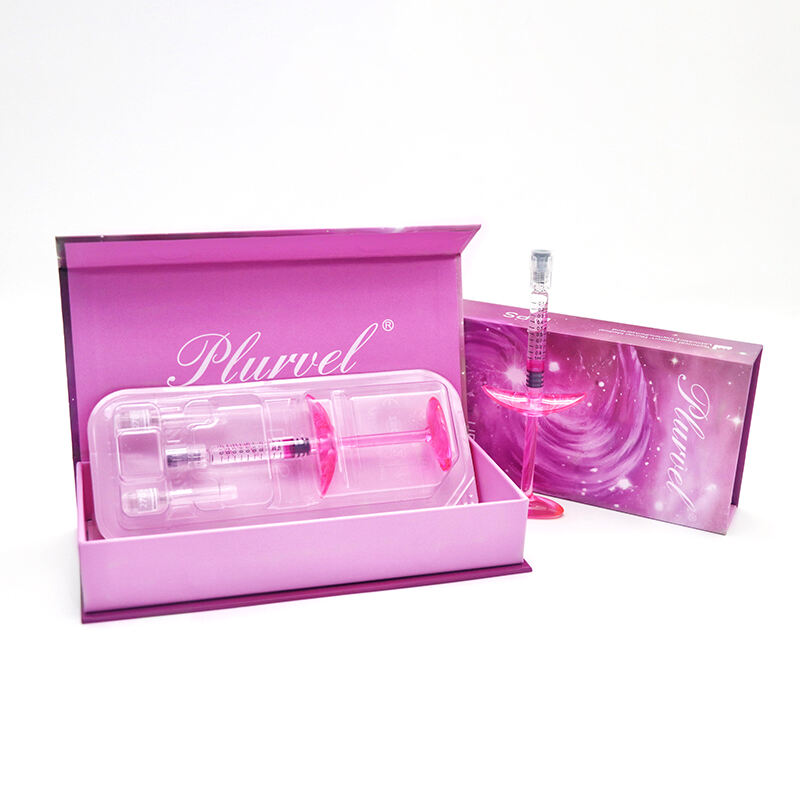
Why HA Concentration Is the Strategic Lever in OEM Hyaluronic Acid Injection Development
Concentration as a Differentiator: Efficacy, Safety, and Brand Identity in Competitive Markets
The concentration level of hyaluronic acid really matters when it comes to how well these products work clinically, their safety profile, and where brands position themselves in the market for original equipment manufacturer injectables. For joints problems specifically, anything at or above 2.0% makes the solution thicker and stays longer in tissues which helps keep joints lubricated over time and reduces pain from arthritis something doctors always watch closely. On the flip side, eye treatments need much lower concentrations between 1.0% and 1.6% so they can spread properly inside the eye without causing irritation. Getting this right lets manufacturers create products tailored for specific uses durability matters most in joints, spreadability counts for cosmetic applications, and clear solutions are essential for eye procedures. There's also a safety aspect here higher than 3.0% concentrations tend to cause more friction during injection and generally hurt more, increasing chances of complications. When companies match their HA concentrations to actual clinical results, they turn technical specs into real brand advantages. Premium priced products often sell for 20 to 30 percent more because they have solid research behind them showing both mechanical benefits and proven effectiveness in patients.
Regulatory Boundaries: FDA, EMA, and MHLW Requirements for Joint and Ophthalmic OEM Hyaluronic Acid Injection Formulations
Regulators around the world consider hyaluronic acid concentration a key factor in determining product classification, required tests, and approval processes. For example, the FDA allows no more than 1.0% HA for eye treatments but goes up to 1.6 to 2.4% for knee injections. European authorities want consistent batches staying within plus or minus 5% of stated levels, labeling anything beyond plus or minus 7% as serious problems. Japanese regulators take it even further with tighter limits at plus or minus 3%, and they demand special toxicity studies when concentrations exceed 2.5%. Small changes matter too. Just a 0.2% difference could push a medical device from category II to III status, which means extra clinical work and delays getting products to market for about 9 to 12 months. Companies ignoring these rules face big financial hits. Recalls caused by inconsistent HA levels typically run around $740,000 each according to a 2023 study by Ponemon Institute. Smart manufacturers build regulatory compliance right from the start through approaches like Quality by Design (QbD). They use advanced modeling techniques and real time testing methods to keep HA levels within legal ranges no matter what scale they're producing at.
| Regulatory Factor | FDA (US) | EMA (EU) | MHLW (Japan) |
|---|---|---|---|
| Max Ophthalmic HA | 1.0% | 0.8% | 1.2% |
| Joint Injection HA | 1.6–2.4% | 1.8–2.2% | ≥2.5% |
| Concentration Tolerance | ±7% | ±5% | ±3% |
Precision Manufacturing: Controlling OEM Hyaluronic Acid Injection Concentration from Powder to Final Fill
Aseptic Dilution Protocols for Consistent Batch-to-Batch HA Concentration Accuracy
Getting accurate concentrations to meet regulatory standards requires following ISO 13485 guidelines throughout the entire process from handling raw materials all the way to the final filling step. The automated systems used for dispensing powder can measure hyaluronic acid within about half a percent mass tolerance. Meanwhile, these closed loop dilution modules keep everything sterile when mixing solutions, which gets rid of those open bench operations that tend to create inconsistencies. For checking concentrations before filling happens, real time conductivity sensors are really helpful. They let operators catch any drift issues right away if readings go beyond plus or minus 0.2%. We know from research published in the Journal of Orthopaedic Research back in 2023 that even just a 1% error in concentration can cut down on effective pain relief time by nearly three weeks for knee treatments. That's why top equipment manufacturers have started incorporating inline analysis tools at this critical point in production. Finally, servo controlled fillers make sure each vial or syringe gets exactly the same amount of liquid every single time. This kind of consistency matters a lot not only for making sure patients get reliable results but also for maintaining consumer confidence in the product over time.
Balancing Viscosity, Syringeability, and Tissue Residence Time Across Concentration Ranges
HA concentration governs rheological behavior nonlinearly: a 2.4% solution exhibits over 300% greater viscosity than a 1.6% formulation. While this enhances tissue residence time by ~40%, it also raises injection force—potentially compromising patient comfort and clinician adoption. OEM manufacturers resolve this tradeoff through three integrated controls:
- Shear-thinning excipients, such as modified cellulose derivatives, reduce peak injection force by up to 35% without altering HA concentration or molecular weight;
- Temperature-controlled filling environments (22°C ±2°C) prevent viscosity spikes caused by ambient fluctuations;
-
Needle-gauge calibration: 27G needles for concentrations ≥2.0%; 25G for 2.0–2.4% formulations.
Clinical data confirms that 2.2% HA achieves optimal balance—delivering 8-month joint lubrication efficacy while maintaining injection force below 20N, making it the benchmark for premium OEM osteoarthritis lines.
Strategic Positioning: Aligning OEM Hyaluronic Acid Injection Concentration with Clinical Niche and Commercial Goals
Choosing the right concentration levels connects medical effectiveness with business success in the marketplace. The higher end of the spectrum, around 2 to 2.4 percent, makes sense both medically and financially when treating conditions that need lasting results and strong mechanical properties. Think knee osteoarthritis cases, specific eye surgery applications, and deeper tissue enhancements for aesthetics. These concentrations justify their cost through better patient outcomes. On the lower end, concentrations between 1 and 1.6 percent work well for budget conscious markets like supporting procedures or surface level skin treatments. This approach lets manufacturers stand out beyond just pricing considerations. They can highlight real world benefits such as extended pain relief periods, fewer repeat treatments needed, or enhanced control during procedures. Pairing these concentration choices with appropriate distribution channels creates real value. Specialty clinics tend to stock those high concentration osteoarthritis products while general dermatology practices often carry mid range formulas across wider geographic areas. This strategic matching helps boost profit margins and expand market presence effectively.
Case Study: Orthobiologics Brand That Captured Premium Segment Using 2.4% vs. 1.6% HA for Knee OA
A major player in the orthobiologics space shook up the knee osteoarthritis treatment landscape when they introduced their 2.4% hyaluronic acid injection, directly challenging the long-standing 1.6% standard that had dominated the market. Clinical trials showed patients experienced about 50% longer pain relief periods, going from around 8 months to 12 months on average. Mobility scores according to the WOMAC scale also improved by roughly 30%, thanks to better retention properties because of the higher viscosity. Instead of fighting over price points, the company focused its efforts on educating top prescribers among orthopedic specialists about actual patient outcomes. They highlighted how fewer repeat treatments were needed and how patients generally functioned better after treatment. These factors allowed them to charge about 40% more than competitors and still managed to grab nearly a quarter of the premium market segment within just two years. The product stayed well within both FDA and EMA regulations regarding viscosity limits (below 2.4% and 2.2% respectively) while maintaining extremely consistent quality across batches with less than plus or minus 0.25% variation in concentration. This shows it's possible to aim high clinically without sacrificing compliance requirements or production standards.
Avoiding Common Pitfalls in OEM Hyaluronic Acid Injection Concentration Customization
Getting the right HA concentration involves bringing together clinical knowledge, regulatory standards, and engineering expertise, but there are common pitfalls worth noting. When companies focus too much on cutting raw material costs by choosing something like 1.2% HA just to save money on materials, they end up compromising treatment effectiveness. Most studies show that anything under 1.5% simply doesn't maintain proper synovial viscosity for moderate to severe osteoarthritis cases, which means shorter lasting benefits and damaged brand reputation over time. Then there's the tricky relationship between viscosity and how well the product can be injected. Formulations above 2.5% HA tend to push beyond safe injection forces (over 25 Newtons) even when using standard 25 gauge needles, leading to patient discomfort and abandoned procedures. Regulatory issues pop up too when manufacturers ignore regional differences in acceptable limits. Products approved at 1.0% HA in the US might get rejected in Europe where the maximum allowed is only 0.8%. Poor process control creates another headache with batch inconsistencies. Deviations larger than plus or minus 0.3% can change how quickly the product breaks down and affects its overall lifespan, possibly altering safety characteristics. Lastly, the concentration needs to align with specific market positioning goals. Research from 2023 found that 2.4% HA provides about 30% better pain relief for knee OA compared to 1.6%, but this higher concentration actually works against precision in things like fine line corrections for aesthetics. Before scaling up production, thorough testing at different body temperatures (around 25 to 37 degrees Celsius) and various shear conditions (between 10 and 100 seconds inverse) helps ensure the finished product will perform as expected both biologically and practically during actual use.
FAQ
-
What is the significance of HA concentration in hyaluronic acid injections?
HA concentration affects the clinical efficacy, safety, and market positioning of injections. Higher concentrations provide more durable joint lubrication but may increase injection force, impacting patient comfort. -
Why do regulatory bodies set limits on HA concentration?
Regulatory bodies like the FDA, EMA, and MHLW set limits to ensure product safety, consistency, and efficacy, while preventing complications related to injection force and tissue irritation. -
How do manufacturers ensure consistent HA concentrations?
Manufacturers follow protocols such as ISO 13485 guidelines, use real-time conductivity sensors, and implement closed-loop dilution modules to maintain consistent concentrations throughout production. -
What challenges do companies face with HA concentration customization?
Companies may compromise effectiveness by choosing low concentrations to save costs, face regulatory rejection due to regional differences, or experience batch inconsistencies affecting product performance. -
How can HA concentration influence market positioning?
Choosing the right concentration connects medical effectiveness with business success and helps manufacturers stand out by offering extended pain relief periods, fewer repeat treatments needed, and enhanced control during procedures.
Table of Contents
-
Why HA Concentration Is the Strategic Lever in OEM Hyaluronic Acid Injection Development
- Concentration as a Differentiator: Efficacy, Safety, and Brand Identity in Competitive Markets
- Regulatory Boundaries: FDA, EMA, and MHLW Requirements for Joint and Ophthalmic OEM Hyaluronic Acid Injection Formulations
- Precision Manufacturing: Controlling OEM Hyaluronic Acid Injection Concentration from Powder to Final Fill
- Strategic Positioning: Aligning OEM Hyaluronic Acid Injection Concentration with Clinical Niche and Commercial Goals
- Case Study: Orthobiologics Brand That Captured Premium Segment Using 2.4% vs. 1.6% HA for Knee OA
- Avoiding Common Pitfalls in OEM Hyaluronic Acid Injection Concentration Customization
- FAQ