
 EN
EN
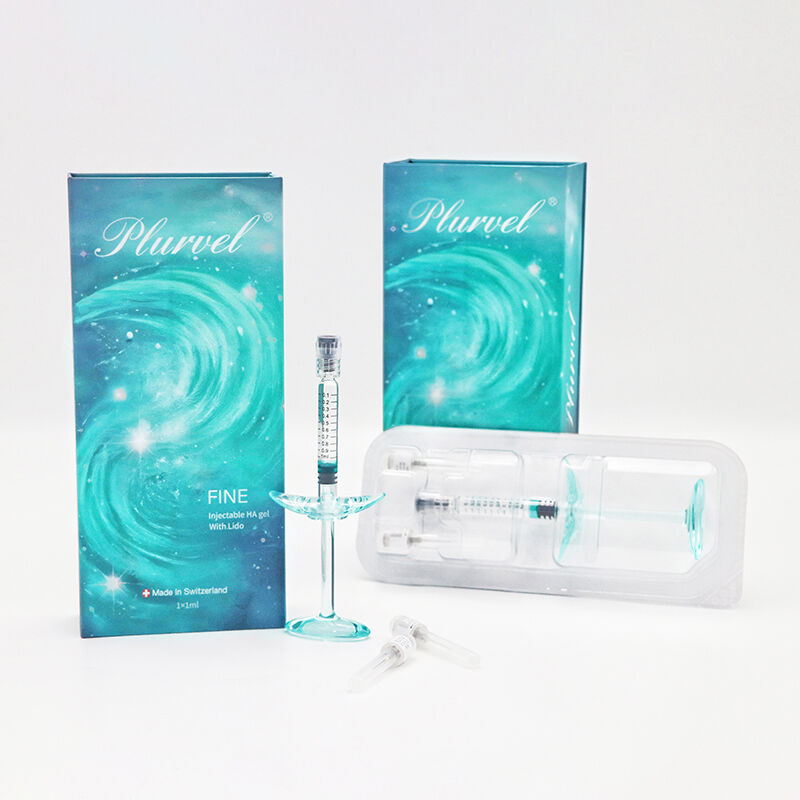
The Science Behind Hyaluronic Acid Filler Crosslinking
How Covalent Crosslinking Transforms Native HA into Stable Injectable Hydrogels
Hyaluronic acid found naturally in our bodies breaks down pretty quickly when placed in tissues because enzymes called hyaluronidases break it apart through hydrolysis. That's why native HA isn't really good for lasting cosmetic fixes. To solve this problem, manufacturers use covalent crosslinking techniques that create strong three dimensional networks between HA molecules. What starts as a watery solution gets transformed into something much tougher and suitable for injection as hydrogels. This process keeps all those great water binding properties intact but makes the material much more mechanically stable. These specially treated gels stand up better against enzyme attacks and don't deform easily even when faces move around normally. Patients get predictable results that last significantly longer than what would happen with untreated HA.
Key Performance Drivers: Viscoelasticity, Residence Time, and Biodegradation Kinetics
Clinical performance of crosslinked HA fillers is governed by three interdependent properties:
- Viscoelasticity (G'/G''): Reflects the balance between elastic (solid-like) and viscous (fluid-like) behavior. A higher elastic modulus (G') provides structural support-critical for lifting and volumizing in areas like the midface.
- Residence Time: Determined primarily by crosslink density and resistance to hyaluronidase cleavage. Optimal formulations extend longevity without compromising eventual biodegradability.
- Biodegradation Kinetics: Should follow a controlled, progressive fragmentation pattern to avoid abrupt volume loss. Overly dense crosslinking can delay degradation, increasing risk of nodularity or delayed inflammatory responses.
Manufacturers fine-tune these parameters through precise control of crosslinker type, concentration, and reaction conditions-tailoring products for distinct clinical applications, from lip enhancement to deep structural augmentation.
How Crosslinker Chemistry Shapes Hyaluronic Acid Filler Behavior
Crosslink Density vs. Mechanical Properties: Why More Isn’t Always Better
When crosslink density goes up, so does viscosity and how long material stays in place. But push past that sweet spot and things start going wrong fast for flexibility and how well tissues integrate. Research from last year showed something interesting about these materials. Fillers with medium crosslinking around 150 to 200 Pa s viscosity actually worked pretty well. They kept their shape when stressed but still had enough give to follow natural facial movements. The problem comes when networks get too tight. These super dense structures require more force to inject, which can cause tiny injuries. Plus cells have trouble getting into them, and this might explain why sometimes we see filler moving around or feeling lumpy, especially noticeable in areas where faces move a lot like around the mouth.
Spacer Length Effects: BDDE, DVS, and PEGDE Impact on Elastic Recovery and Tissue Integration
The molecular length and chemistry of the crosslinker directly influence network architecture-and thus clinical behavior:
| Crosslinker | Spacer Length | Elastic Recovery | Tissue Integration |
|---|---|---|---|
| BDDE | Long-chain | High (85-92%) | Moderate |
| DVS | Short-chain | Moderate (75-80%) | Rapid |
| PEGDE | Variable | Adjustable | Enhanced |
The longer spacers found in compounds like 1,4-butanediol diglycidyl ether (BDDE) produce these really flexible networks full of recoil properties. These are great for adding volume where lift is needed most, such as in the cheek area. On the flip side, shorter chain substances such as divinyl sulfone (DVS) form much denser structures that get integrated rapidly into the upper skin layers. Because of this characteristic, they work particularly well when addressing fine lines around the face. There's also new stuff coming onto the market now, including various ferulic acid based products. What makes these interesting is their ability to break down through enzymes naturally in the body, which means there's very little leftover toxicity. This feature makes them especially suitable for sensitive areas of the face like under the eyes where traditional options might pose risks.
Clinical Implications of Crosslinking Choice in Hyaluronic Acid Filler Applications
Matching Crosslinker Profile to Indication: Soft Tissue Refinement vs. Structural Volume Restoration
The crosslinking approach needs to match what the body actually requires both structurally and functionally. When working on delicate soft tissues like smoothing out those pesky lines around the mouth or sharpening lip contours, we find that low density, runnier HA gels give much better results because they adapt naturally and move with the skin instead of feeling stiff. These gentler formulas blend right into the deeper layers of skin without limiting movement or creating obvious signs of filler underneath. On the flip side, when restoring lost volume in areas like the cheeks or projecting forward for a stronger jawline, doctors need stiffer, highly crosslinked hydrogels with good G' values. These materials stand up against gravity and maintain their shape over time. Recent research from multiple clinics shows that when practitioners pick the wrong crosslink level for a particular area, about one in four cases ends up looking less than ideal. That's why experienced injectors always tailor their product choices based on exactly what each part of the face needs.
Regulatory & Safety Trends: Low-Residual Crosslinkers (e.g., Ferulic Acid) Gaining Traction
The focus of regulatory requirements is clearly moving away from what it used to be, with much more attention being paid to reducing leftover crosslinker material that can cause inflammation problems later on. Safety standards these days aim for residue amounts under 2 parts per million, which studies show cuts down on inflammation after injections by around 97%. Take ferulic acid based crosslinkers as an example of how things are changing. These substances actually get broken down completely by enzymes inside the body, leaving behind harmless byproducts that don't hurt cells. According to last year's Regulatory Review report, nearly four out of five new applications submitted to the FDA now include these improved breakdown technologies. What we're seeing here isn't just about making products last longer anymore. The whole industry seems to be shifting its priorities towards better compatibility with the body, particularly important when working with delicate skin areas where old style crosslinkers sometimes lead to swelling issues or those annoying granuloma formations that take forever to go away.
FAQ Section
What is crosslinking in hyaluronic acid fillers?
Crosslinking in hyaluronic acid fillers involves chemically binding HA molecules to create a three-dimensional network, enhancing the stability and longevity of the fillers.
What factors influence the performance of HA fillers?
The performance of HA fillers is influenced by viscoelasticity, residence time, and biodegradation kinetics.
How does crosslink density affect filler behavior?
Increasing crosslink density enhances viscosity and filler longevity but can reduce flexibility and tissue integration if too high.
What are some common crosslinkers used in HA fillers?
BDDE, DVS, and PEGDE are common crosslinkers, each with distinct properties influencing the filler’s elasticity and tissue integration.
What are the advantages of low-residual crosslinkers like ferulic acid?
Low-residual crosslinkers reduce inflammation risk as they are broken down completely by the body, leaving minimal byproducts.